Shopify Speed & CRO: How to Turn E-Commerce Clicks Into Revenue
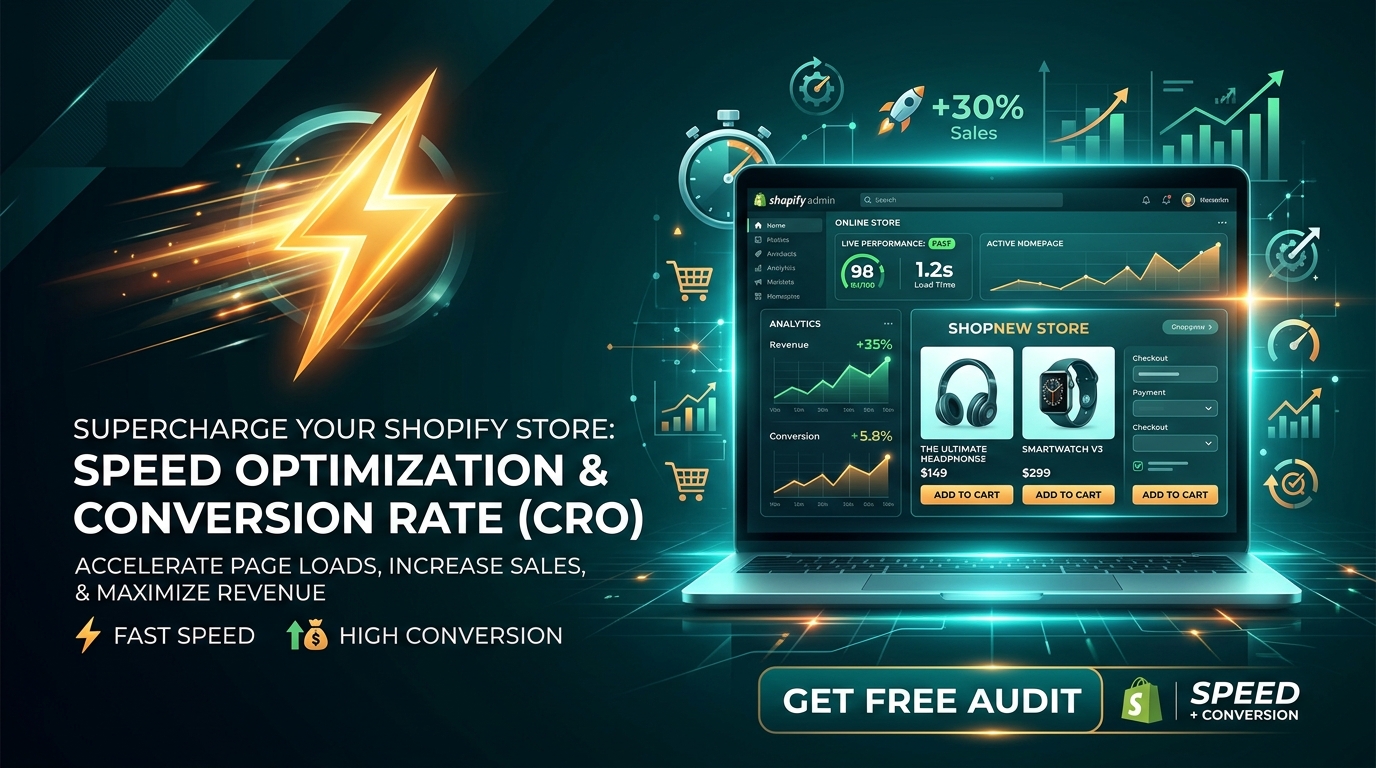
Optimizing a Shopify store for conversions and speed requires eliminating bloated page builder apps, refactoring heavy JavaScript, utilizing native Liquid sections, preloading hero images, and streamlining the checkout flow to achieve mobile load times under 3 seconds.
## The High Cost of Slow Shopify Stores
Studies consistently prove that every 1-second delay in mobile store loading leads to a 7% drop in conversion rates. Heavy page-builder apps and unoptimized media assets are the primary drivers of slow Shopify performance.
5 Critical Steps for High-Converting Shopify Stores:
1. **Replace Page Builders with Native Liquid Code**: Native Liquid sections eliminate render-blocking JS bundles, resulting in instant mobile interaction. 2. **Preload & Modernize Images**: Serve product imagery in Next-gen formats (AVIF/WebP) with explicit `width` and `height` attributes to prevent layout shifts (CLS). 3. **Streamline Mobile Checkout**: Remove unnecessary form fields, offer 1-click Express Checkouts (Shop Pay, Apple Pay), and display visible security reassurances. 4. **Implement Automated Abandonment Loops**: Connect Shopify webhooks to Klaviyo for immediate cart and checkout recovery sequences. 5. **Monitor Core Web Vitals**: Regularly audit Largest Contentful Paint (LCP) and Interaction to Next Paint (INP) using Lighthouse.
Need Help Implementing These Growth Tactics?
Book a private strategy session with Rizwan Saeed.